Flags of Asia
Last reviewed on 2026-10-01.
Asia’s 49 countries fly 49 very different flags, but most of them belong to a handful of recognisable families: the red, white, green and black of the Pan-Arab flags; the crescent and star shared by Turkey, Pakistan, Azerbaijan, Malaysia and others; the red-and-yellow designs of China and Vietnam; and a group of flags built around religious symbols, from Nepal’s twin pennants to Bhutan’s thunder dragon. The table below shows every flag with a short description, and the sections after it explain the shared traditions and a few of the stranger designs.
All 49 flags at a glance
Countries are listed alphabetically and follow the same list used across this site; each name links to the country’s map and profile. Descriptions cover the main colours and emblems rather than exact proportions or official colour codes.
| Flag | Country | Description |
|---|---|---|
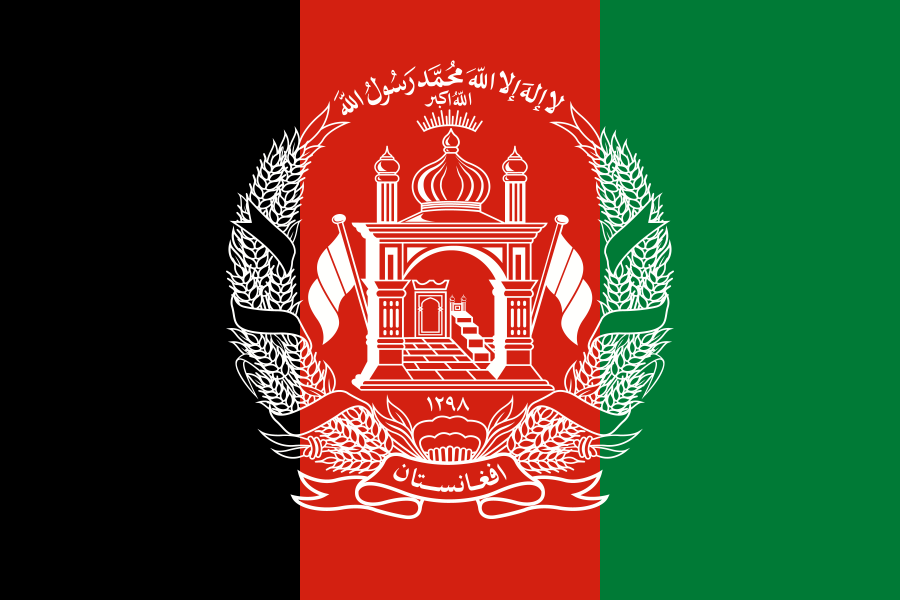 | Afghanistan | Disputed since 2021. The Taliban administration flies a white flag bearing the Shahada (the Islamic declaration of faith) in black; the vertical black, red and green tricolour with a white national emblem, used by the former Islamic Republic, is still flown by some embassies and international bodies. |
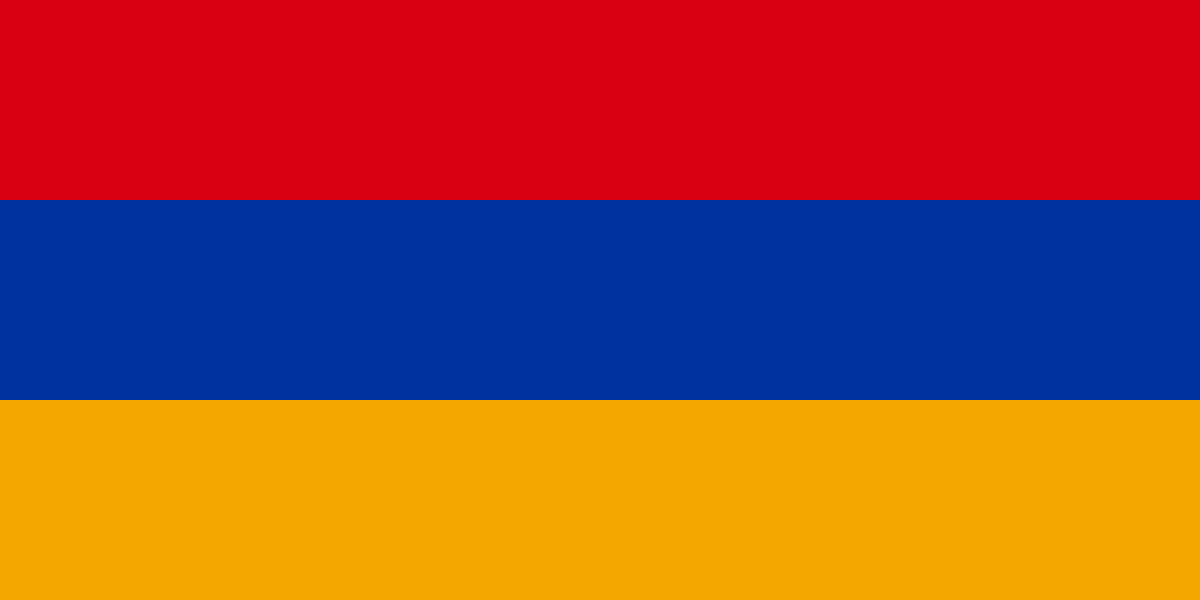 | Armenia | Three horizontal bands of red, blue and orange. |
 | Azerbaijan | Horizontal bands of blue, red and green, with a white crescent and eight-pointed star in the centre. |
 | Bahrain | Red, with a white band at the hoist divided from the red by a serrated edge of five white points. |
 | Bangladesh | A red disc on a dark green field, set slightly towards the hoist so that it appears centred when the flag flies. |
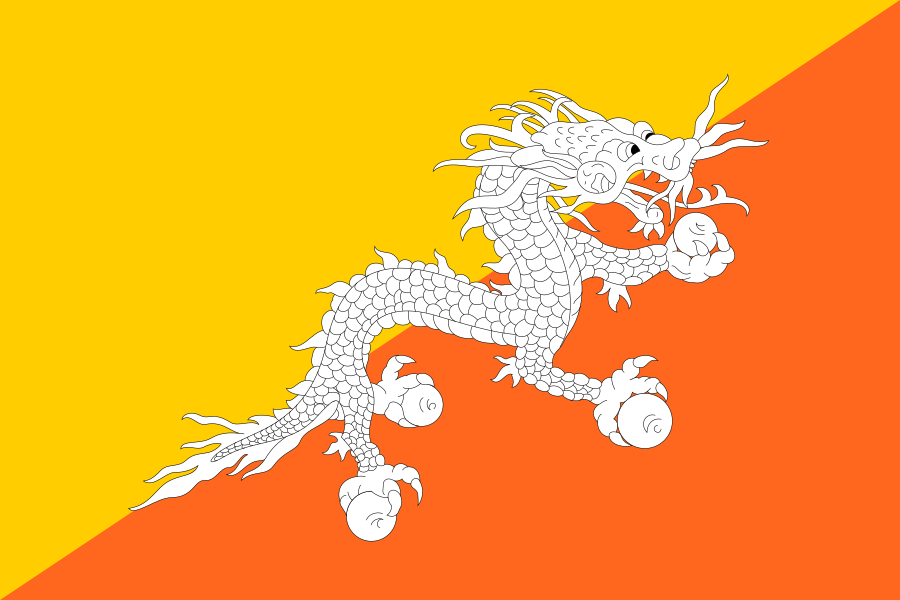 | Bhutan | Divided diagonally into yellow (upper hoist) and orange (lower fly), with a white thunder dragon, the Druk, lying along the dividing line. |
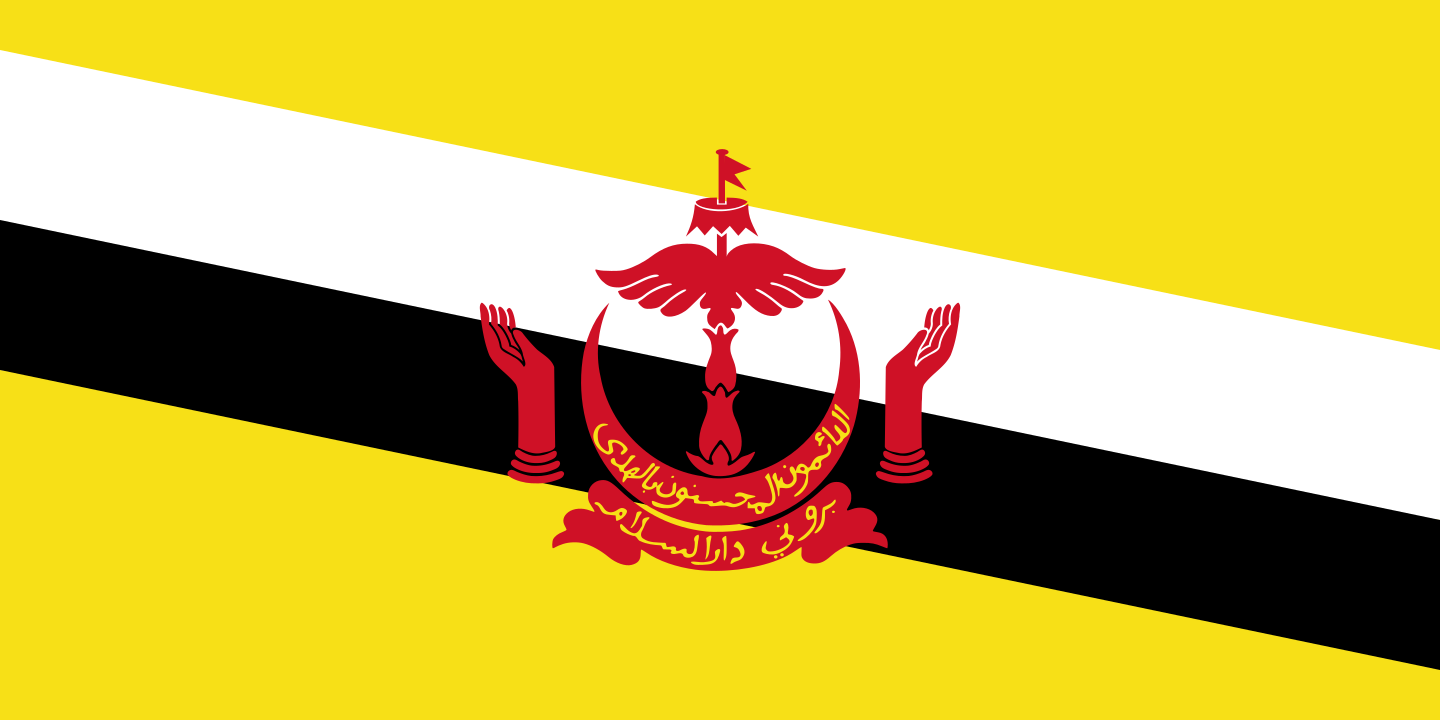 | Brunei | Yellow, crossed diagonally by white and black bands, with the red national crest in the centre. |
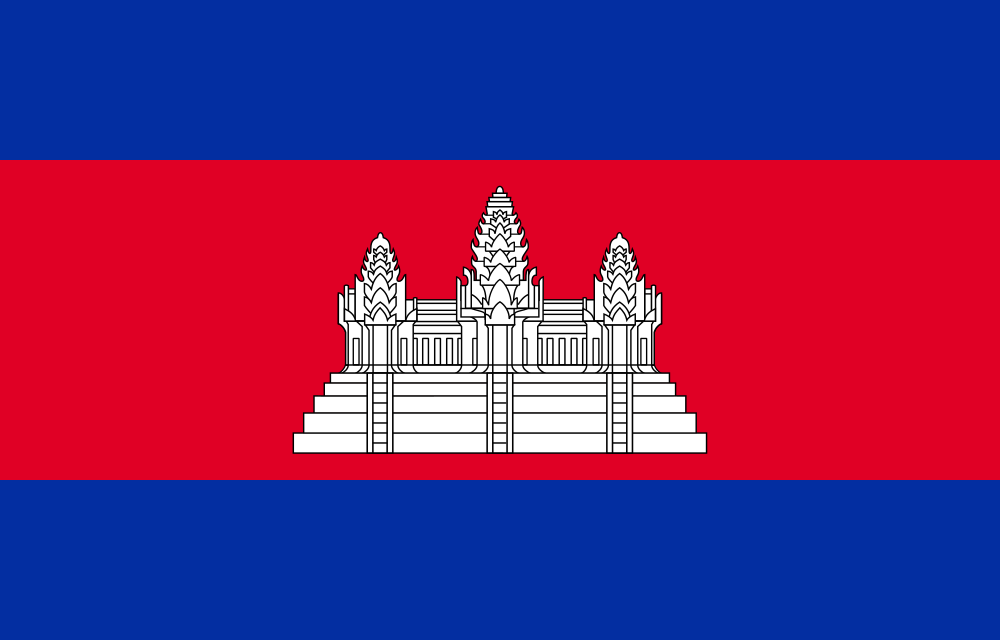 | Cambodia | Blue, red and blue horizontal bands, the red band twice as tall, with a white depiction of the temple of Angkor Wat. |
 | China | Red, with one large yellow five-pointed star and an arc of four smaller stars in the upper hoist corner. |
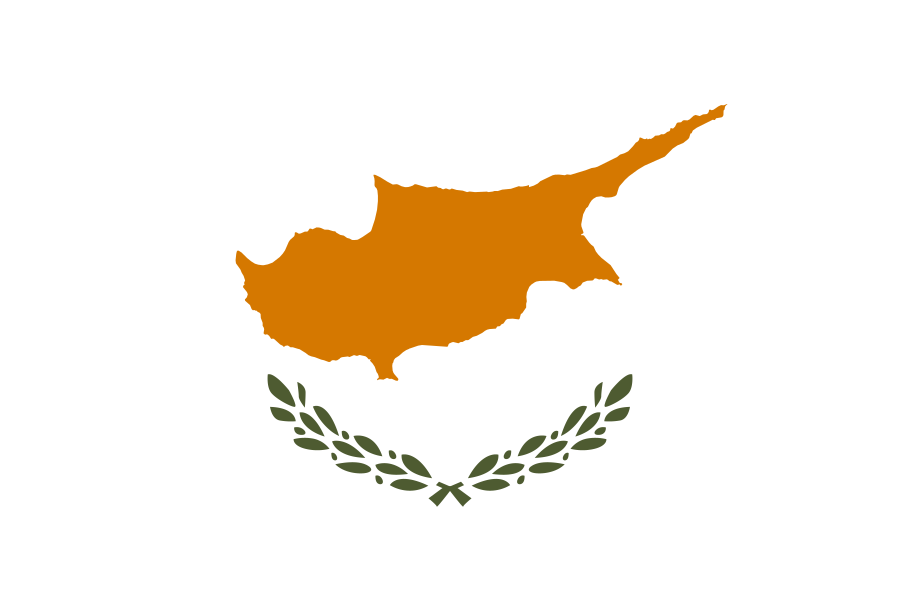 | Cyprus | White, with a copper-coloured silhouette of the island above two crossed green olive branches. |
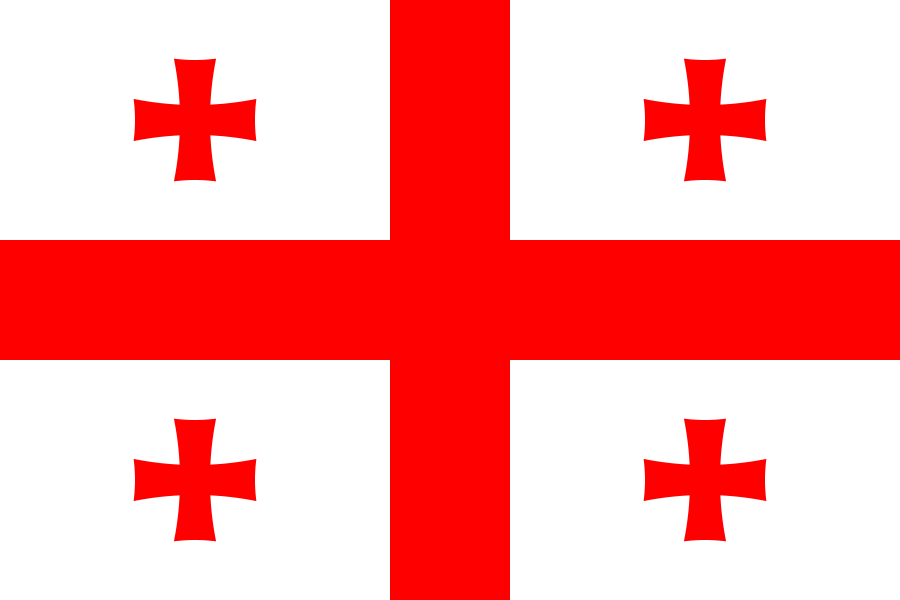 | Georgia | White, with a large red cross of St George and a smaller red cross in each of the four quarters. |
 | India | Saffron, white and green horizontal bands, with a navy-blue 24-spoke wheel, the Ashoka Chakra, in the centre. |
 | Indonesia | Two horizontal bands: red over white. |
 | Iran | Green, white and red horizontal bands, with the red national emblem in the centre and the phrase Allahu Akbar repeated in stylised script along the edges of the white band. |
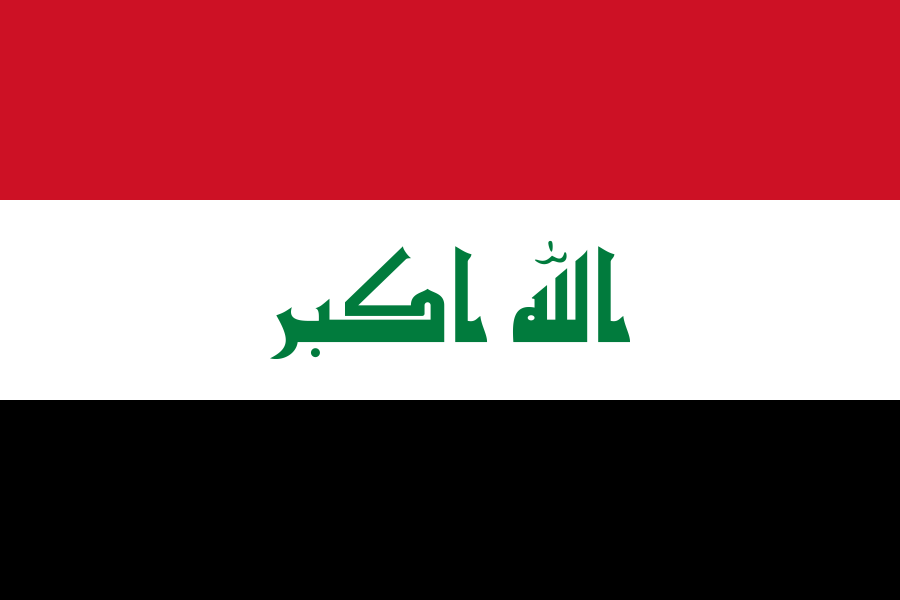 | Iraq | Red, white and black horizontal bands, with Allahu Akbar written in green in the white band. |
 | Israel | White, with two horizontal blue stripes and a blue Star of David between them. |
 | Japan | A red disc in the centre of a white field, known as the Hinomaru. |
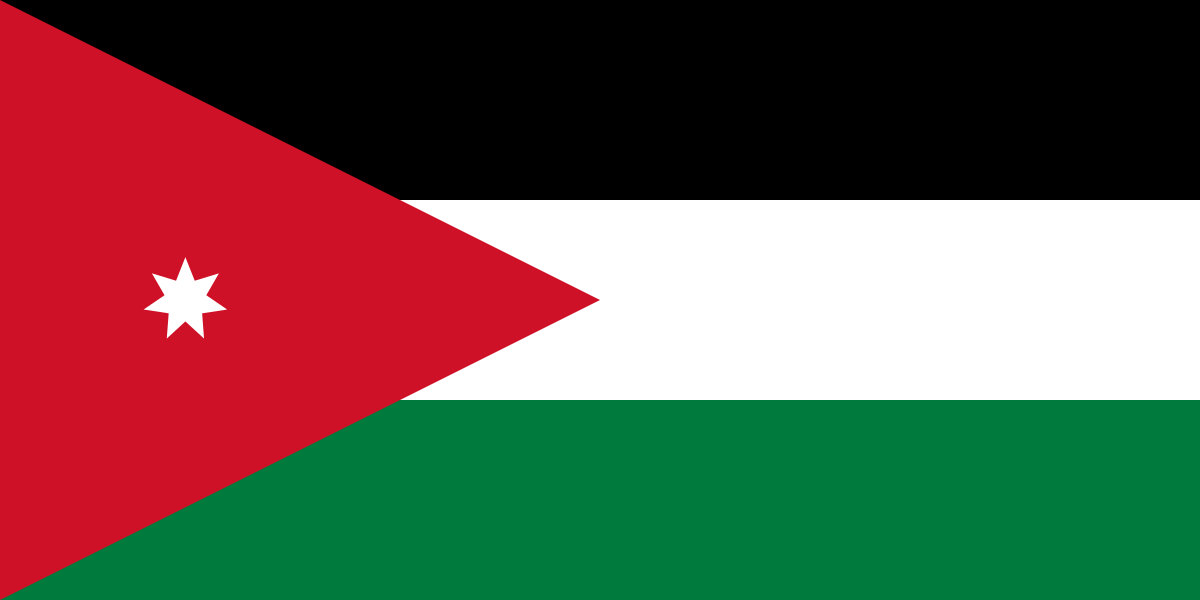 | Jordan | Black, white and green horizontal bands, with a red triangle at the hoist containing a white seven-pointed star. |
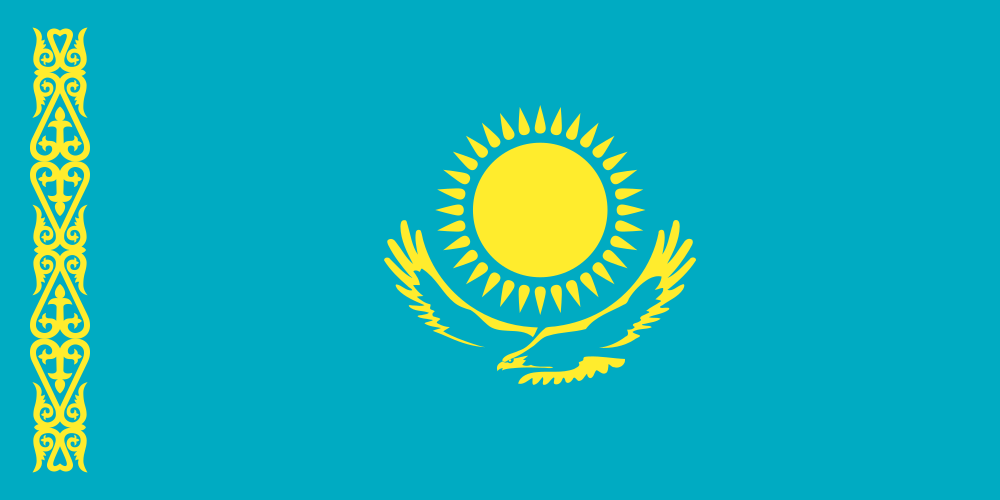 | Kazakhstan | Sky blue, with a golden sun above a soaring steppe eagle and a vertical band of traditional ornament along the hoist. |
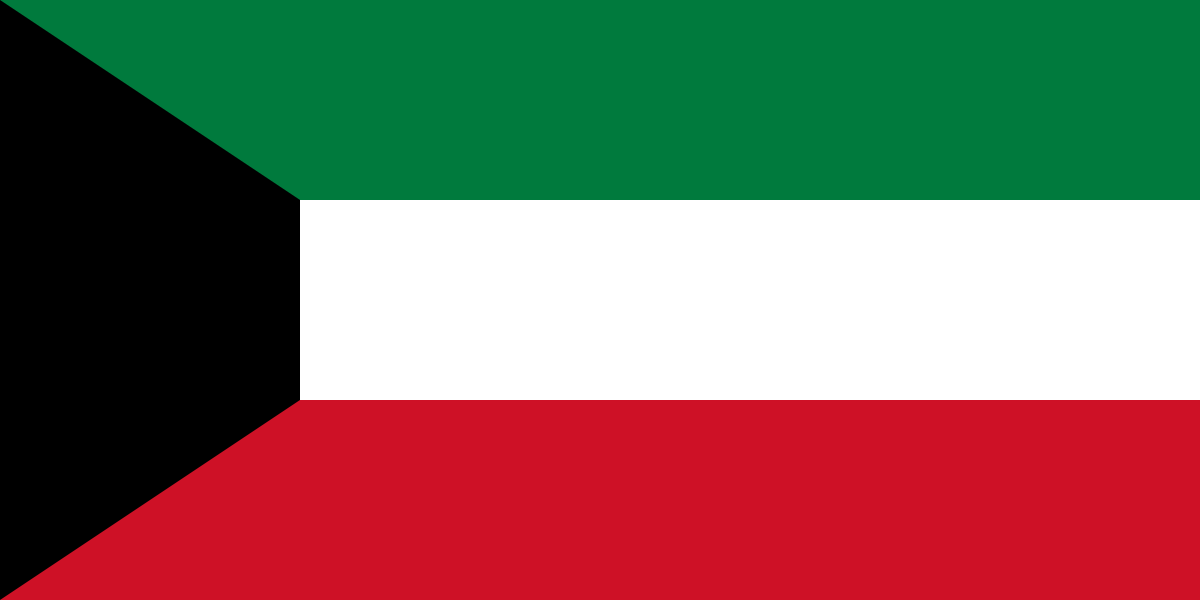 | Kuwait | Green, white and red horizontal bands, with a black trapezium at the hoist. |
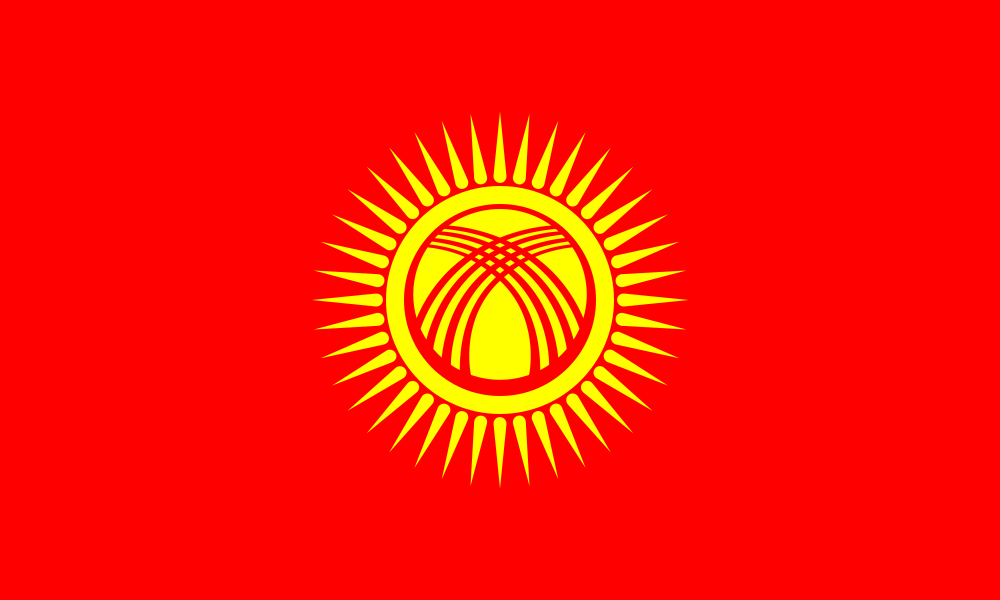 | Kyrgyzstan | Red, with a yellow sun of 40 rays enclosing a stylised tunduk, the crown of a yurt roof. |
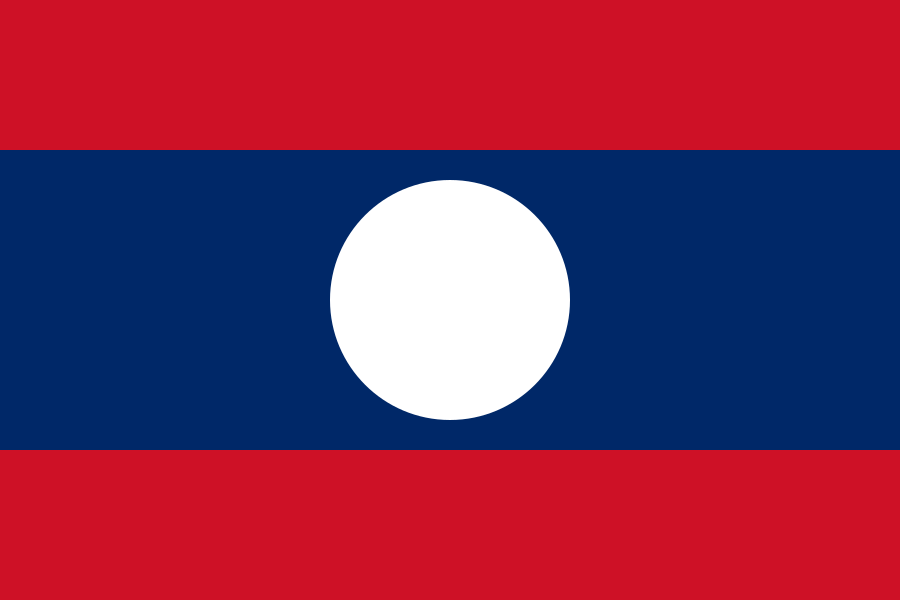 | Laos | Red, blue and red horizontal bands, the blue band twice as tall, with a white disc in the centre. |
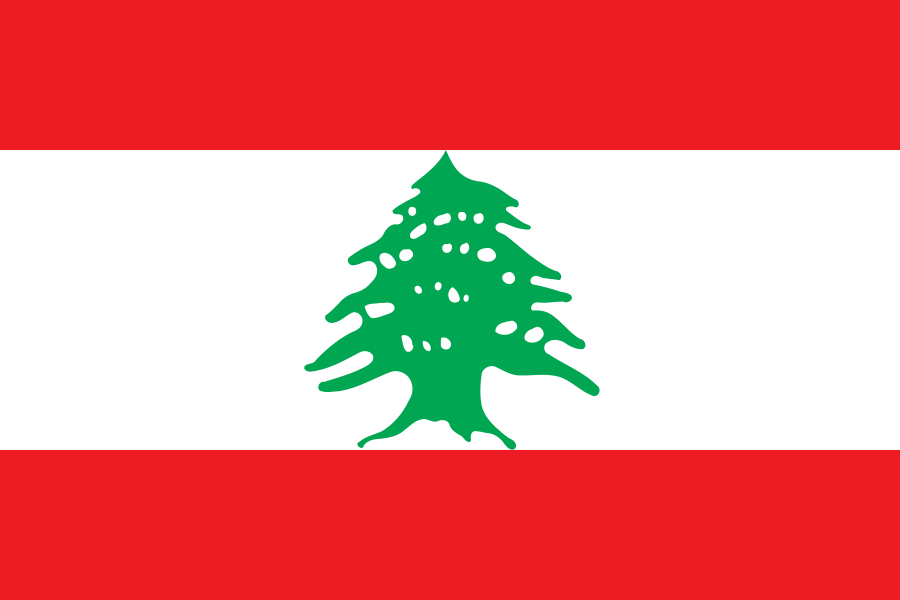 | Lebanon | Red, white and red horizontal bands, the white band twice as tall, with a green cedar tree in the centre. |
 | Malaysia | Fourteen alternating red and white stripes, with a blue canton bearing a yellow crescent and 14-pointed star. |
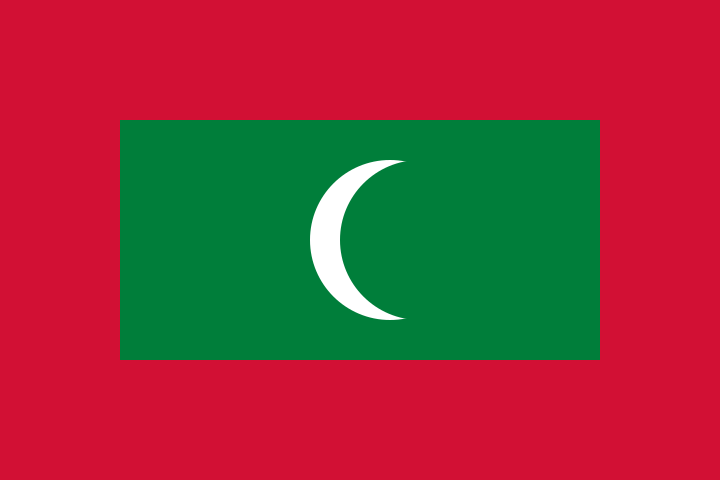 | Maldives | Red, with a green rectangle in the centre holding a white crescent. |
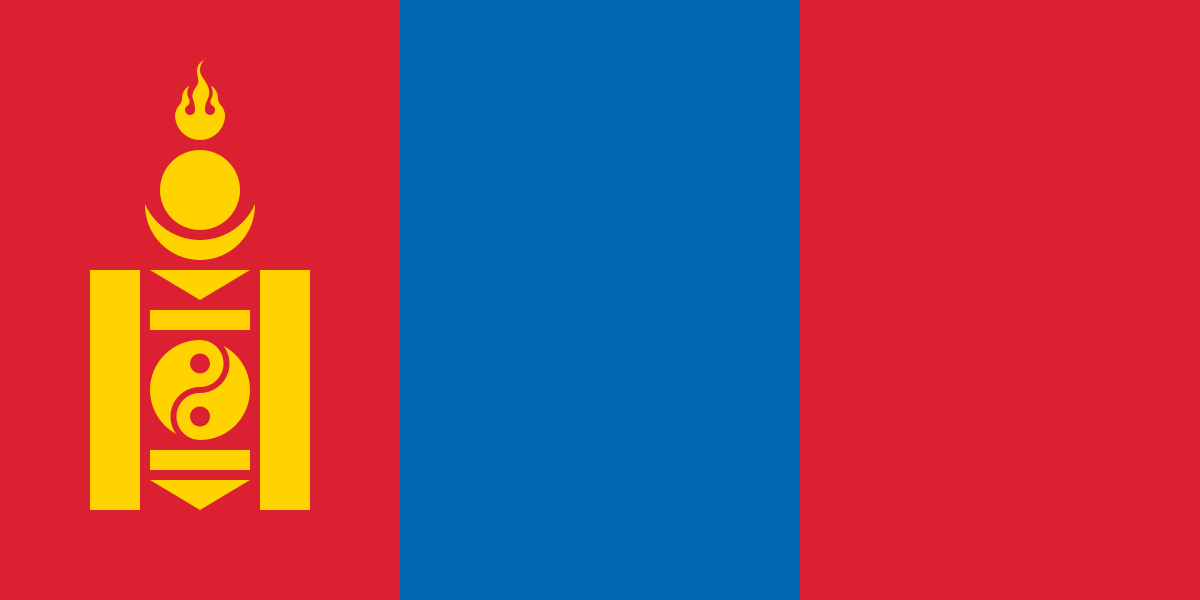 | Mongolia | Vertical bands of red, blue and red, with the yellow Soyombo symbol on the hoist-side red band. |
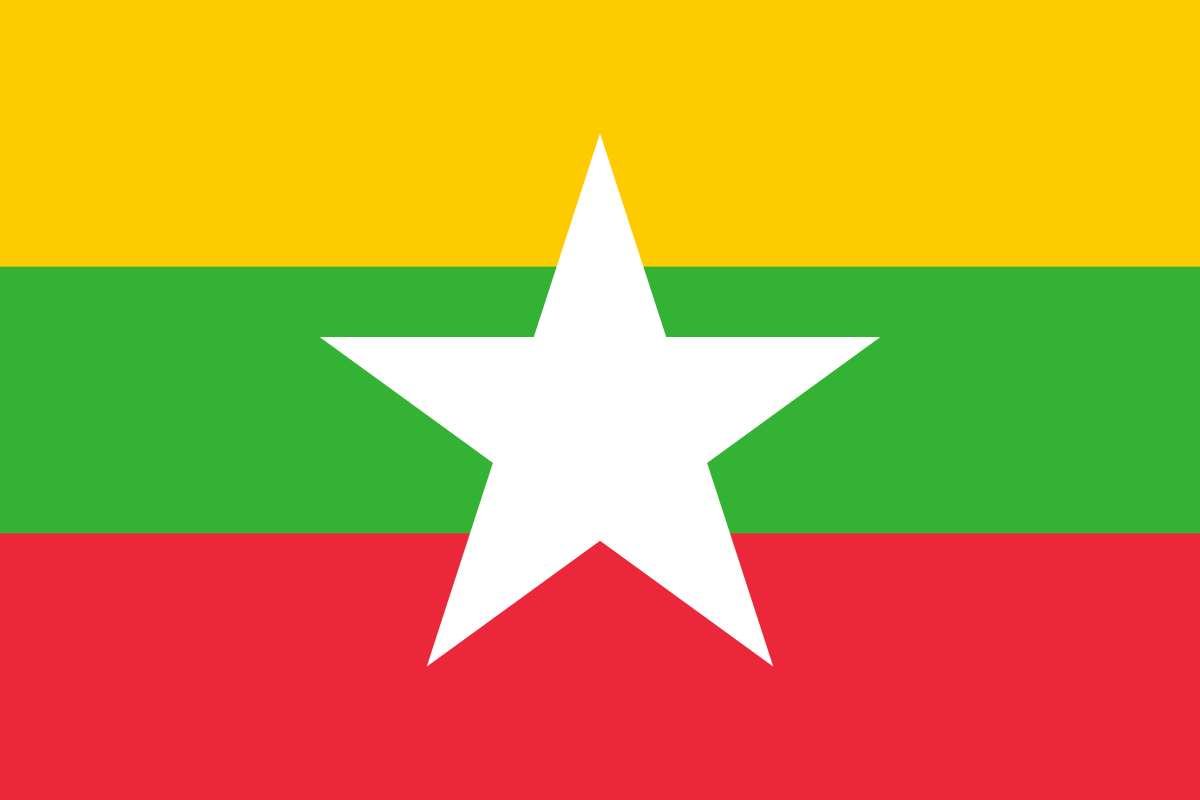 | Myanmar | Yellow, green and red horizontal bands, with a large white five-pointed star in the centre. |
 | Nepal | Two stacked crimson pennants with a blue border; the upper one carries a white moon, the lower a white sun. |
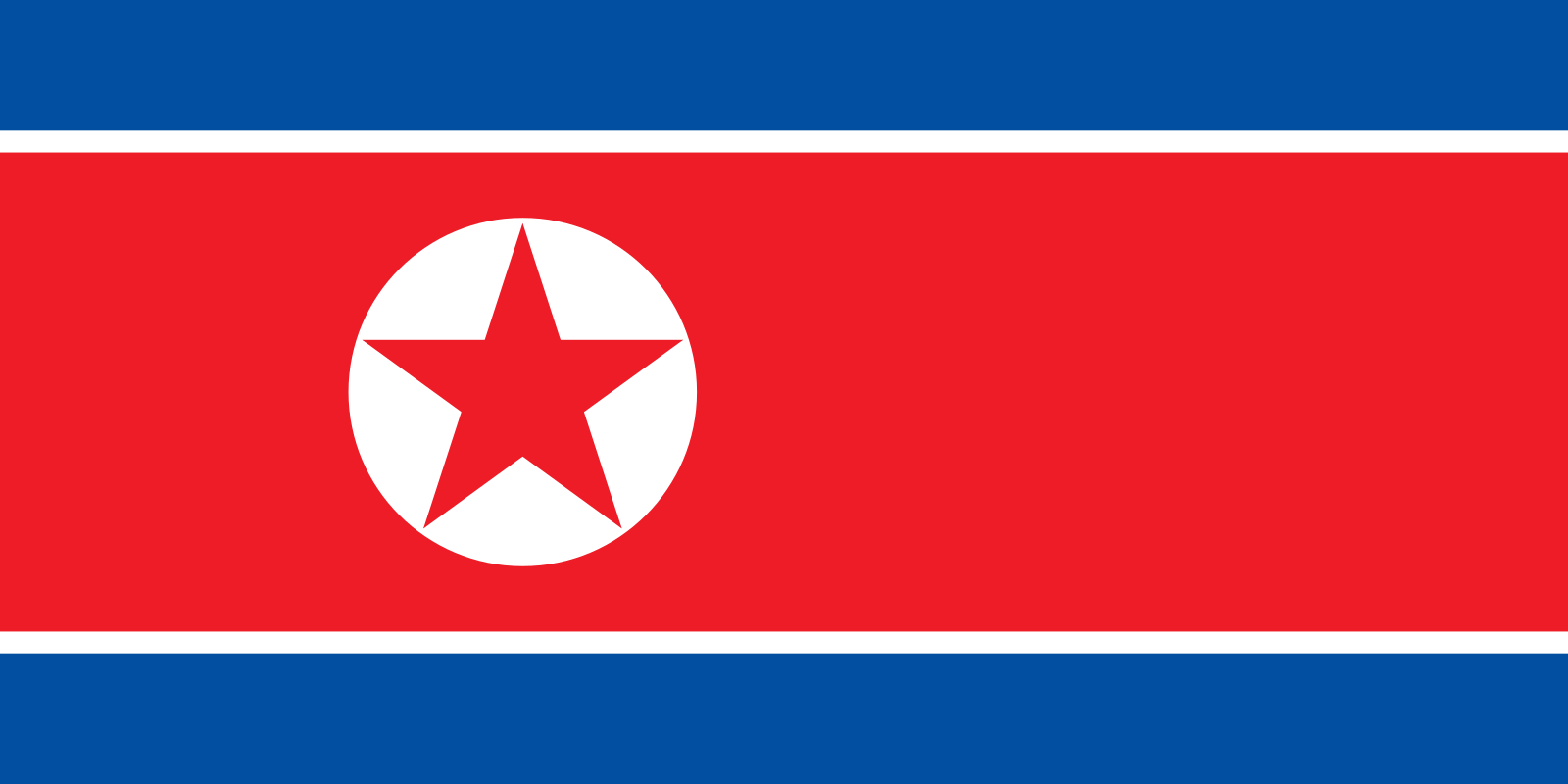 | North Korea | Blue, thin white, red, thin white and blue horizontal bands; the wide red band holds a white disc with a red five-pointed star, set towards the hoist. |
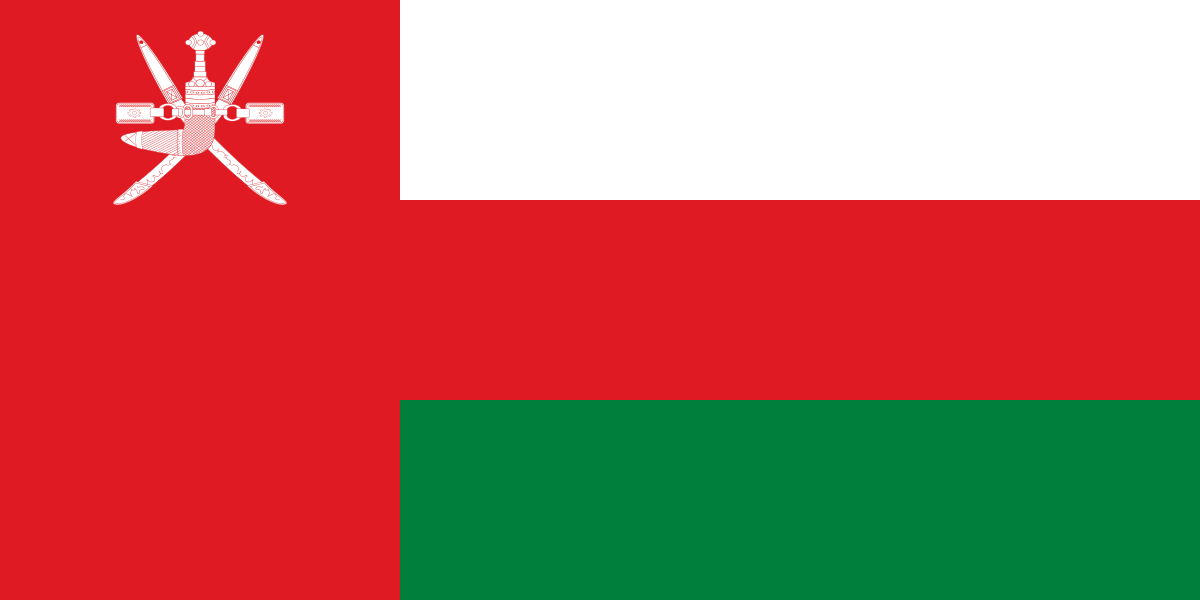 | Oman | A vertical red band at the hoist and horizontal bands of white, red and green; the national emblem of a curved dagger over crossed swords appears in the upper hoist. |
 | Pakistan | Dark green with a white vertical band at the hoist, and a white crescent and five-pointed star on the green. |
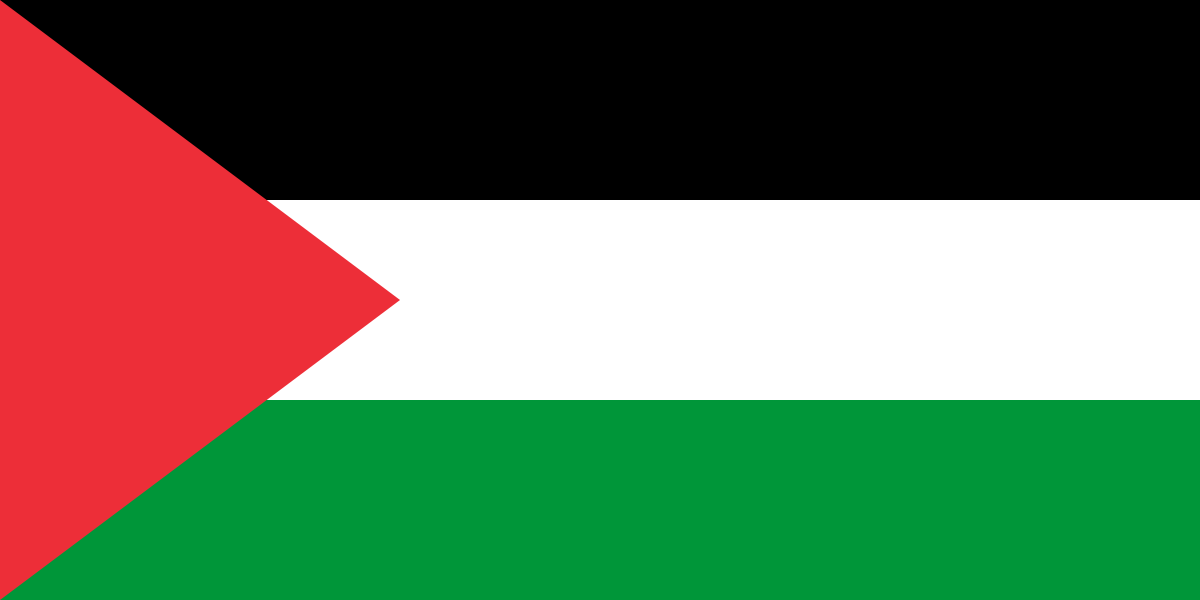 | Palestine | Black, white and green horizontal bands, with a red triangle at the hoist. |
 | Philippines | Blue over red, with a white triangle at the hoist containing a golden eight-rayed sun and three golden five-pointed stars. |
 | Qatar | Maroon, with a white band at the hoist joined by a serrated edge of nine points. |
 | Saudi Arabia | Green, with the Shahada in white Arabic script above a horizontal sword. |
 | Singapore | Red over white, with a white crescent and a ring of five white stars in the upper hoist. |
 | South Korea | White, with a red-and-blue taegeuk circle in the centre and four black trigrams, one near each corner. |
 | Sri Lanka | A gold lion holding a sword on a crimson panel with a bo leaf in each corner, all inside a gold border; two vertical stripes of green and saffron sit at the hoist. |
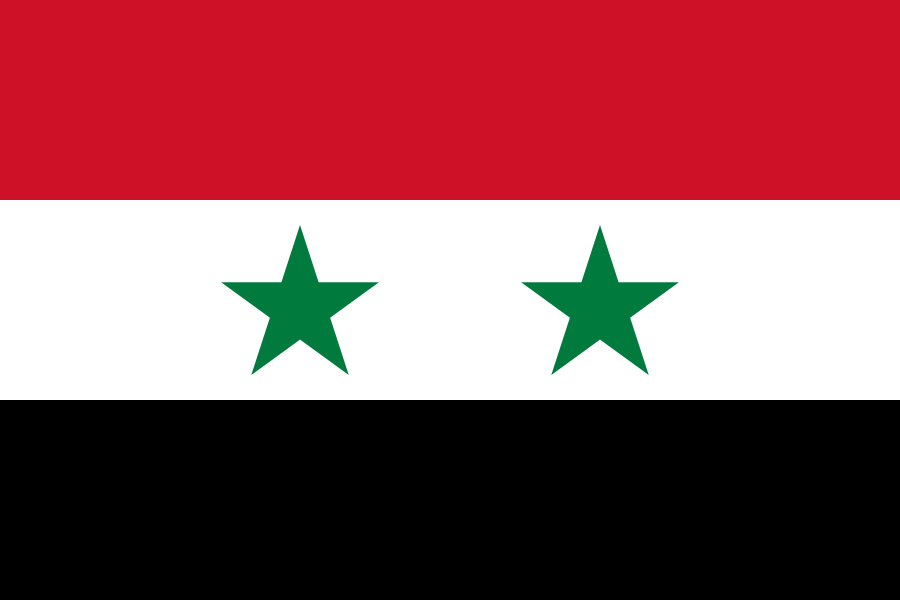 | Syria | Green, white and black horizontal bands with three red stars in the white band — the independence-era flag, adopted by the new authorities after December 2024 in place of the red, white and black flag with two green stars. |
 | Taiwan | Red, with a blue canton bearing a white sun with twelve rays. |
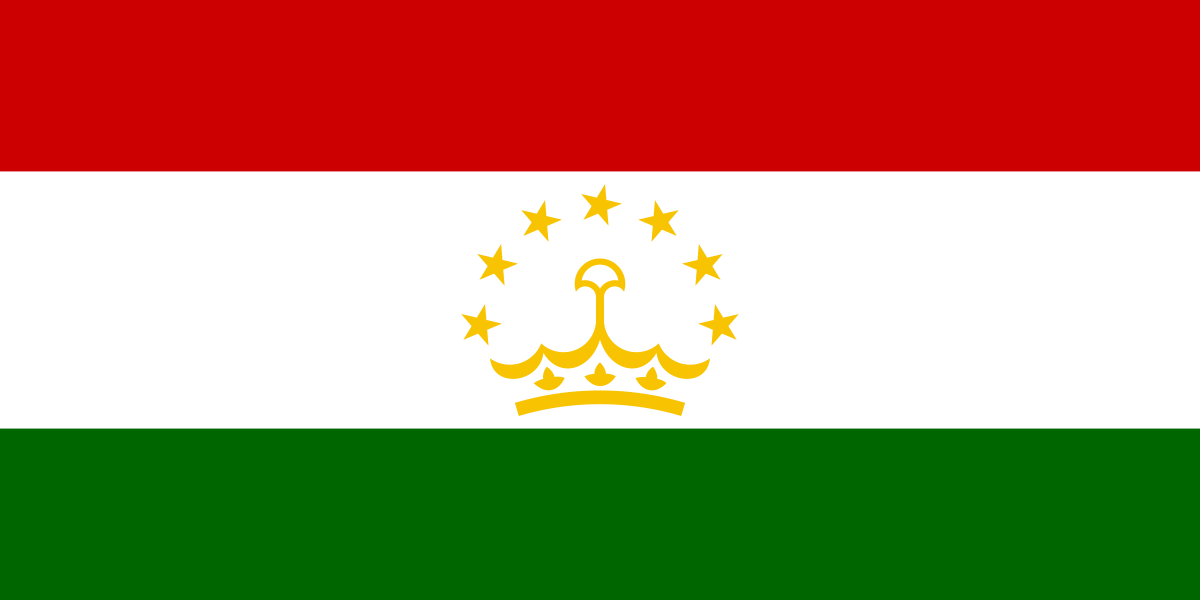 | Tajikistan | Red, white and green horizontal bands, the white band wider, with a gold crown beneath an arc of seven gold stars. |
 | Thailand | Five horizontal stripes of red, white, blue, white and red, the central blue stripe twice as tall. |
 | Timor-Leste | Red, with a black triangle laid over a larger yellow triangle at the hoist; a white star sits in the black triangle. |
 | Turkey | Red, with a white crescent and five-pointed star. |
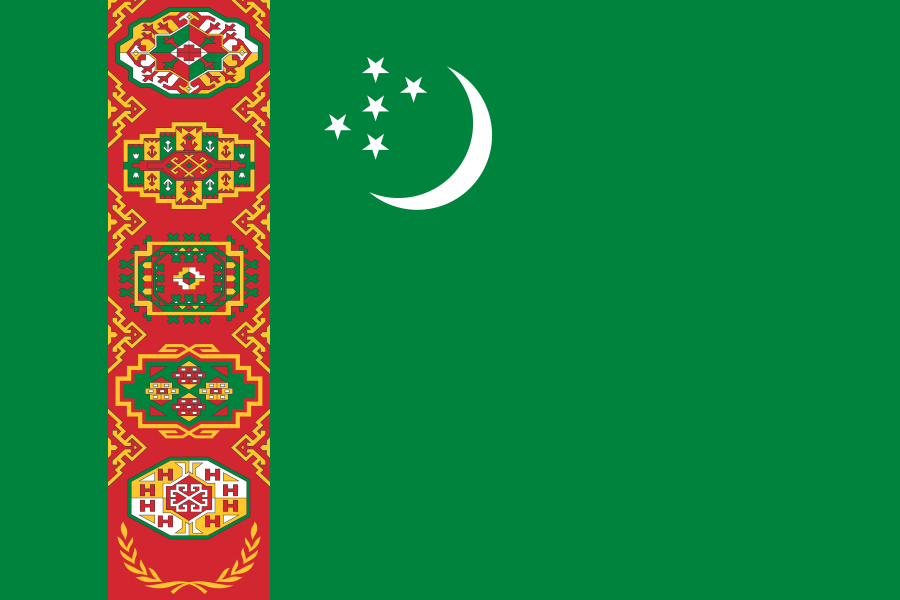 | Turkmenistan | Green, with a vertical red stripe near the hoist carrying five carpet motifs (guls) above crossed olive branches, and a white crescent with five stars beside it. |
 | United Arab Emirates | A vertical red band at the hoist and horizontal bands of green, white and black. |
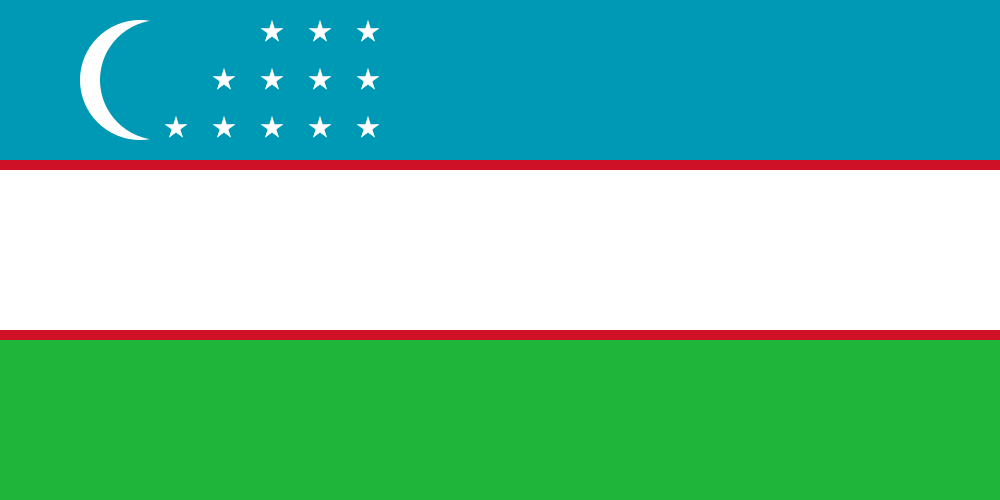 | Uzbekistan | Blue, white and green horizontal bands separated by thin red lines, with a white crescent and twelve white stars in the blue band. |
 | Vietnam | Red, with a large yellow five-pointed star in the centre. |
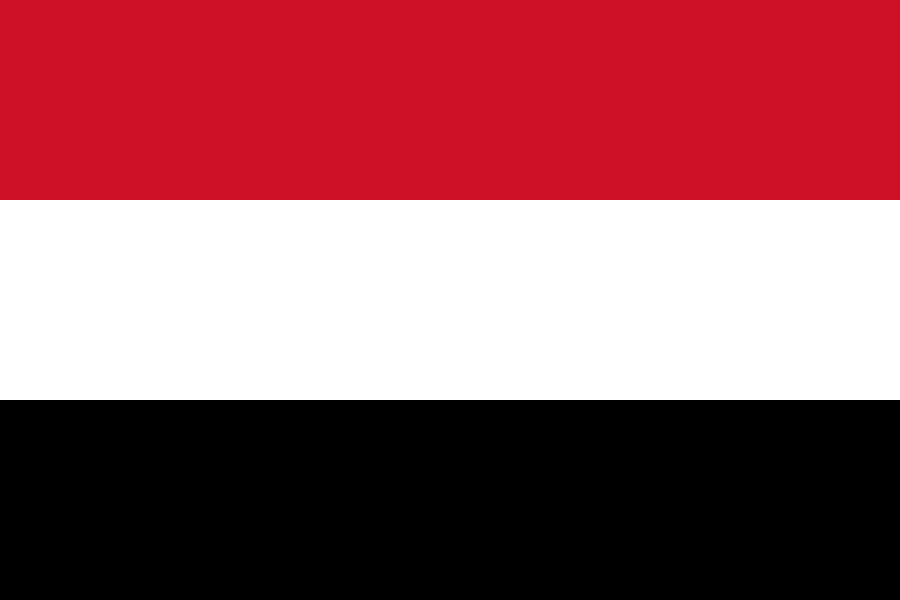 | Yemen | Red, white and black horizontal bands. |
Pan-Arab colours: red, white, green and black
The single largest family of flags in Asia uses the four Pan-Arab colours. They descend from the flag of the Arab Revolt of 1916–18 against Ottoman rule, which combined black, green and white horizontal bands with a red triangle at the hoist. The most faithful modern descendants are Jordan, which adds a white seven-pointed star to the red triangle, and Palestine, which uses the same layout without the star. Kuwait turns the triangle into a black trapezium; the United Arab Emirates stretches the red into a vertical band along the hoist.
A second branch, associated with the Arab nationalist movements of the 1950s, uses plain red, white and black horizontal stripes. Yemen flies the bare tricolour; Iraq adds Allahu Akbar in green; and until recently Syria added two green stars. Syria’s change of flag after the fall of the Assad government in December 2024 moved it back to an older design: the green, white and black tricolour with three red stars that had been used around the time of independence and was adopted by the opposition during the civil war.
Not every Arab flag follows this scheme. Saudi Arabia’s green flag with the Shahada and a sword comes from a separate religious and dynastic tradition. Because it carries the declaration of faith, it is not normally lowered to half-mast, and it is made so that the inscription reads correctly from both sides. Bahrain and Qatar share a distinctive red (in Qatar’s case, maroon) field with a serrated white band; Bahrain’s five white points and Qatar’s nine are the easiest way to tell them apart. Oman combines white, red and green with its national emblem of a curved khanjar dagger over crossed swords.
The crescent and star
The crescent and star is best known from the Ottoman flag and its direct successor, the flag of Turkey. Across Asia it is now widely read as a symbol associated with Islam, although the motif is older than Islam and several countries give it secular meanings. It appears on the flags of Azerbaijan (with an eight-pointed star), Pakistan, Malaysia (with a 14-pointed star representing the federation’s member states and federal government), Turkmenistan and Uzbekistan, while the Maldives uses the crescent alone. Singapore is an interesting case: its crescent is officially explained as a young nation on the rise and its five stars as the ideals of democracy, peace, progress, justice and equality, rather than as a religious emblem.
Red and white: Indonesia, Singapore and Monaco
Indonesia’s flag, the Sang Saka Merah-Putih, is about as simple as a flag can be: a red band above a white one. Its colours are traced to the banners of the Majapahit empire, and the flag was raised at the declaration of independence in 1945. It is famously almost identical to the flag of Monaco, in Europe; the two differ only in proportions (Indonesia’s is longer, at 2:3, against Monaco’s squarer 4:5) and arguably in the exact shade of red. Poland’s flag reverses the order, white over red.
Closer to home, Singapore also uses red over white, but its crescent and five stars make it impossible to confuse with Indonesia. The red-and-white pairing appears again in the stripes of Malaysia’s flag, the Jalur Gemilang, whose fourteen stripes echo the 14-pointed star in the canton.
Buddhist and Hindu symbolism in the Himalaya and South Asia
Nepal has the only national flag in the world that is not a rectangle or square. It consists of two stacked triangular pennants, crimson with a blue border, the upper one bearing a white moon and the lower a white sun. The shape is usually explained as a combination of two pennants once flown by rival branches of the ruling dynasty, and the two peaks are often read as the Himalaya or as Hinduism and Buddhism. Unusually, Nepal’s constitution includes step-by-step geometric instructions for drawing the flag correctly.
Bhutan’s flag shows the Druk, the thunder dragon that gives the country its name in Dzongkha, Druk Yul. The yellow half is generally associated with the secular authority of the king and the orange half with the Buddhist spiritual tradition, while the dragon holds jewels in its claws as a symbol of the nation’s wealth and security.
Sri Lanka’s Lion Flag is based on the banner of the last Sinhalese kingdom, at Kandy. The bo leaves in the corners refer to the tree under which the Buddha attained enlightenment, while the green and saffron stripes at the hoist were added to represent the Muslim and Tamil communities. India’s Ashoka Chakra, the 24-spoked wheel in the centre of the tricolour, comes from the lion capital of the emperor Ashoka at Sarnath and is a dharma wheel with roots in Buddhist imagery. Mongolia’s Soyombo — a column of fire, sun, moon, triangles and a yin-yang-like device — is a symbol of the Mongolian Buddhist tradition, and Cambodia is one of very few countries to put a building on its flag: the Hindu-Buddhist temple of Angkor Wat. For the faiths behind these symbols, see Religions of Asia.
Red and yellow: the communist-era flags
Two of Asia’s remaining communist-governed states use the classic combination of a red field and yellow stars. China’s flag, adopted in 1949, has a large star usually described as representing the Communist Party, with four smaller stars representing the people, arranged so that each points towards the large star. Vietnam’s flag reduces the idea to a single large yellow star on red. Laos, also communist-governed, is the exception: its red, blue and white flag with a white disc (often read as a full moon over the Mekong) predates the communist takeover of 1975. North Korea uses a red star too, but inside a white disc on a red, white and blue design.
Red and yellow outside the communist tradition can be misleading. Taiwan’s red flag with a blue canton and white sun is the flag of the Republic of China, adopted on the mainland before 1949; Kyrgyzstan’s red flag with a yellow sun dates from 1992. Kyrgyzstan revised its flag in 2023 to give the sun straight rather than wavy rays.
Central Asian flags
The five Central Asian republics all adopted new flags after the Soviet Union broke up in 1991, and each drew on nomadic or national imagery rather than on the Soviet red. Kazakhstan’s sky-blue flag, with its golden sun and steppe eagle, is one of the most recognisable. Kyrgyzstan’s centres on the tunduk, the wooden crown at the top of a yurt, seen from below. Turkmenistan’s red stripe holds five intricate carpet guls, each associated with one of the country’s major tribes — probably the most detailed design on any Asian flag. Uzbekistan places twelve stars beside its crescent, usually explained as the months of the year, and Tajikistan shows a crown under an arc of seven stars. The Central Asia map shows how these five countries fit together.
Japan’s Hinomaru and South Korea’s Taegukgi
Japan’s flag, officially the Nisshōki and popularly the Hinomaru (“circle of the sun”), is among the oldest designs in Asia: the red sun disc was used on banners and fans for centuries before it was adopted for merchant ships in the nineteenth century. Despite that long history, it was only confirmed as the national flag by law in 1999. The design reflects the idea of Japan as the land of the rising sun, which is also the literal meaning of the country’s name, Nihon.
South Korea’s Taegukgi dates back to the 1880s, when the Joseon kingdom adopted a national flag. The central taegeuk, red above and blue below, represents the balance of opposites (the Korean form of yin and yang). The four black trigrams, taken from the I Ching, stand for heaven, earth, water and fire. For other contrasts between the two Koreas, see the North Korea vs South Korea comparison.
Other distinctive designs
A few flags do not fit any family. Cyprus is one of only two countries to put a map of its own territory on its flag (the other is Kosovo), deliberately avoiding the blue and white of Greece and the red and white of Turkey. Lebanon’s cedar refers to the cedars of Lebanon, mentioned many times in the Bible. The Philippines is said to be the only country whose flag is flown with the red band on top in time of war; its eight sun rays stand for the first provinces to revolt against Spanish rule. Georgia’s five-cross flag, revived in 2004, is based on a medieval design. Timor-Leste, Asia’s youngest state, adopted a flag based on the one first raised at its short-lived declaration of independence in 1975.
Frequently asked questions
Which Asian country has a non-rectangular flag?
Nepal. Its flag is made of two stacked crimson pennants with a blue border, and it is the only national flag in the world that is neither a rectangle nor a square.
Why are the flags of Indonesia and Monaco the same?
Both use a red band over a white band, and the similarity is a coincidence of two old heraldic traditions. They differ in proportions: Indonesia’s flag is 2:3 and Monaco’s is 4:5.
What are the Pan-Arab colours?
Red, white, green and black, taken from the flag of the Arab Revolt of 1916–18. In Asia they appear on the flags of Jordan, Palestine, Kuwait, the United Arab Emirates, Iraq, Syria and Yemen.
Which Asian flags have a crescent and star?
Turkey, Azerbaijan, Pakistan, Malaysia, Singapore (with five stars), Turkmenistan (with five stars) and Uzbekistan (with twelve stars). The Maldives uses a crescent without a star.
What is the dragon on Bhutan’s flag?
It is the Druk, or thunder dragon, the national symbol of Bhutan. Bhutan’s own name for itself, Druk Yul, means “land of the thunder dragon”.
What do the symbols on South Korea’s flag mean?
The red and blue circle in the centre, the taegeuk, represents the balance of opposing forces. The four black trigrams around it stand for heaven, earth, water and fire.
For more country-by-country comparisons, see Asian capitals, Languages of Asia and the regional maps of South Asia, Southeast Asia, East Asia, Central Asia and West Asia. You can also test yourself on the countries behind these flags with the Asia map quiz, or read about the region’s deserts and time zones.